CLEM currently lists two separate colours named Ivory Stone. C05 is described as a warmer, creamier ivory with sparse ochre and grey pinpoints. C20 is described as a cooler pale greige with more visible grey grain. If your schedule says only “Ivory Stone”, it does not identify which colour you mean. Use the code, then compare labelled physical samples beside the project's other finishes before approval.
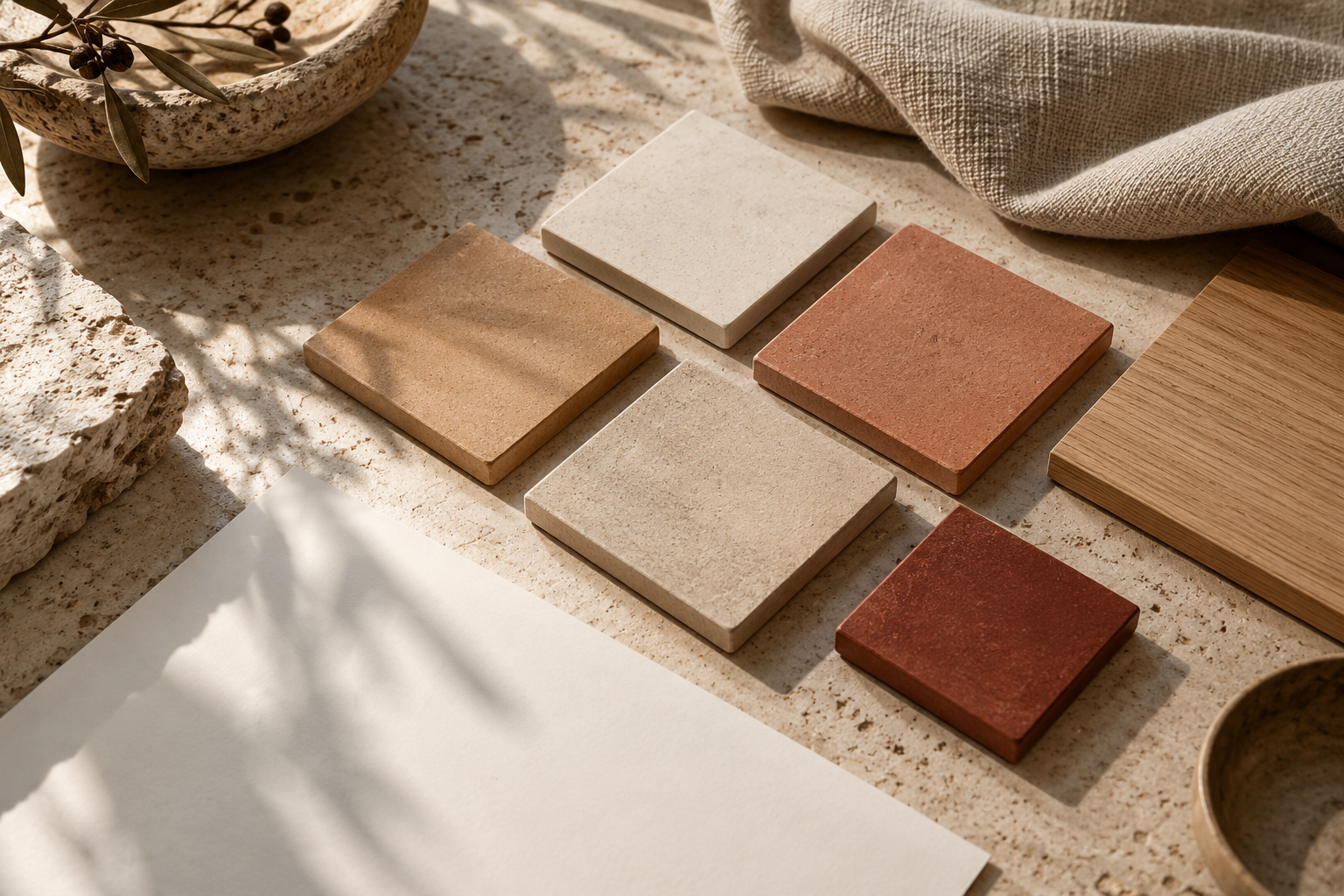
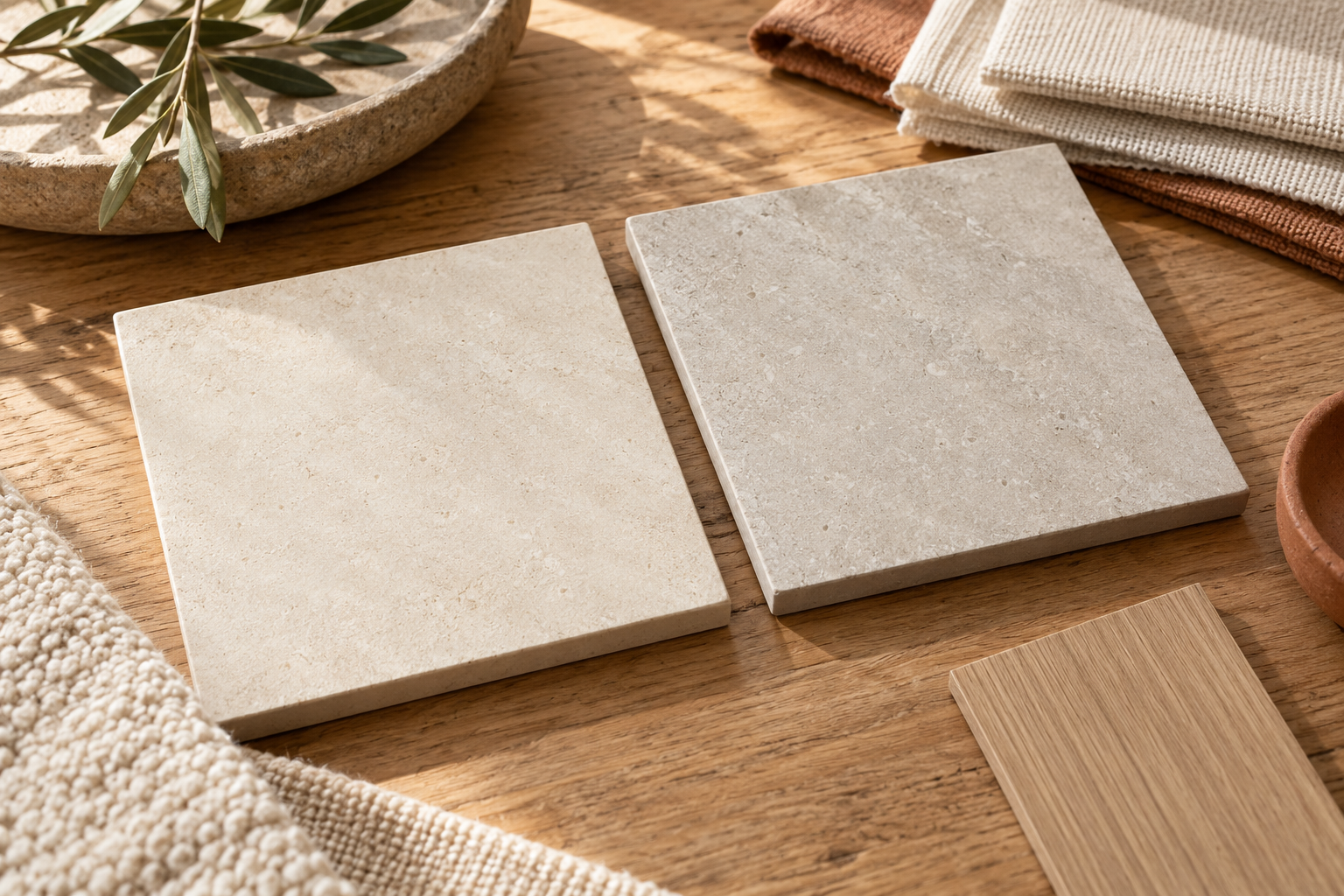
The descriptions below come from CLEM's current C05, C20 and Clem Colour Palette pages, checked 15 October 2026. The three images in this article are AI-generated editorial concepts about reviewing samples. They do not depict either actual CLEM colour, an approved match or a completed project, and they should not be used to judge the difference between C05 and C20.
What do the two product pages actually say?
| Question | C05 Ivory Stone | C20 Ivory Stone |
|---|---|---|
| Listed colour direction | Warm ivory with a creamy base. | Cooler pale greige, without the distinctly creamy undertone described for C05. |
| Visible grain described | Sparse ochre and grey pinpoints. | More visible grey grain and a lightly weathered mineral appearance. |
| CLEM's own comparison | Its photographed strip appears warmer and creamier than C20. | Its photographed strip appears cooler and greyer than C05. |
| Product identity | Product code C05; a separate entry in Clem Colour Palette. | Product code C20; a separate entry in Clem Colour Palette. |
This table reports CLEM's published visual descriptions; it is not a measured colour comparison. The product pages explicitly direct readers to compare full physical samples to confirm undertone, fleck visibility and variation. Camera settings, screen calibration and room lighting can alter what a product photograph seems to show.
The two pages currently show the same four rectangular nominal format listings and the finish names Straight-Edge Finish and Water-Washed Finish. That shared page structure does not establish that a particular size and finish combination is in stock for both colours, or that their technical performance is interchangeable. Ask CLEM to confirm the current options and supporting information for each code you are considering.
Which direction suits the design intent?
For a warm scheme with honey-toned timber, cream paint or warm metal, begin by testing C05. Its published description suggests a softer cream direction, but the actual relationship with a particular timber or paint can only be seen together. A sample may make an adjacent white look cooler or a warm wood look more yellow than expected.
For a scheme built around cooler grey stone, blackened metal or a restrained pale background, begin by testing C20. CLEM's description points to a greyer grain and less creamy undertone. That is a design starting point, not a rule that C20 will work beside every grey surface. A pale greige tile can read differently beside blue-grey paint, warm grey plaster or daylight from a nearby window.
If the brief simply says “light neutral”, request both. The useful choice is often visible in the comparison: whether the tile should connect to the warmer materials or sit closer to the cooler ones. Neither code should be treated as a pure white, and neither product-page image should serve as the approval reference. This palette guidance is an editorial inference from CLEM's descriptions, not a claim of measured colour values.
How should the two samples be compared?
1. Request samples clearly labelled C05 Ivory Stone and C20 Ivory Stone. Ask which current formats and finishes can be supplied for the intended application. If possible, compare the same format and finish so those variables do not dominate the colour judgment.
2. Place several pieces of each code beside the actual paint, timber, stone, metal or grout candidates. A single small chip may conceal the variation and grain that will become visible across a larger surface. Keep each group identified so it cannot be confused after the review.
3. Review the samples in the intended orientation and under the project's real lighting. Look from the principal viewing distance and again close up. Daylight, warm lamps and grazing light can change how creaminess, grey grain and surface texture are perceived.
4. Record the decision as a product code plus the selected format and finish, with a dated physical sample or agreed visual range. Note who approved it and the project surface it applies to. Confirm current product-specific technical information before issuing the final specification.
The two labels matter throughout procurement. An email, drawing note or order that drops the code and says only “Ivory Stone” reintroduces the original ambiguity. Keep “C05 Ivory Stone” or “C20 Ivory Stone” intact in the finish schedule, sample record and supplier enquiry.
A brief example of a clean handoff
Imagine a fictional hotel lobby where an ivory wall tile sits between pale oak joinery and a cool grey stone reception desk. The designer requests C05 and C20 samples, compares them beside both adjoining materials under the proposed lighting, and selects one code after a full-size review. The choice is recorded on the finish schedule as, for example, “C20 Ivory Stone — proposed wall application; selected format and finish to be confirmed with CLEM; final approval against dated physical sample.” This is a hypothetical wording example, not a specification for an actual hotel or a statement that C20 is the correct colour for grey stone.
Start with the separate C05 and C20 pages, then contact CLEM with both product codes, the intended surface, requested sample format and finish, and the adjacent materials you are trying to coordinate. The decision is complete when the team has chosen an identified physical sample and CLEM has confirmed the exact product options and technical information for that project.
Research notes
Sources & verification
- CLEM C05 Ivory Stone product page, checked 15 October 2026: warm creamy base, sparse ochre and grey pinpoints, photographed strip warmer and creamier than C20; product-specific format, finish and technical confirmation required.
- https://www.clemstonetiles.com/product-c05-ivory-stone.html
- CLEM C20 Ivory Stone product page, checked 15 October 2026: cooler pale greige than C05, more visible grey grain, photographed strip cooler and greyer; product-specific confirmation required.
- https://www.clemstonetiles.com/product-c20-ivory-stone.html
- CLEM Clem Colour Palette, checked 15 October 2026: separate C05 and C20 listings with the same Ivory Stone name; compare physical samples in project lighting.
- https://www.clemstonetiles.com/series-clem-colour-palette.html
- Pairing suggestions and fictional hotel example are editorial inferences, not measured colour or product-performance claims. All three images are AI-generated generic sample-review concepts made on 15 October 2026, not colour-accurate C05/C20 product photos, approved samples or completed projects.
Technical suitability and current availability should be confirmed for each project.