Sustainability in interior design is not only about choosing materials labelled as “green”. It is also about understanding where materials come from, how efficiently they are used, and how long they can remain part of a space.
At CLEM, we believe that materials which might otherwise be overlooked can become meaningful design surfaces.
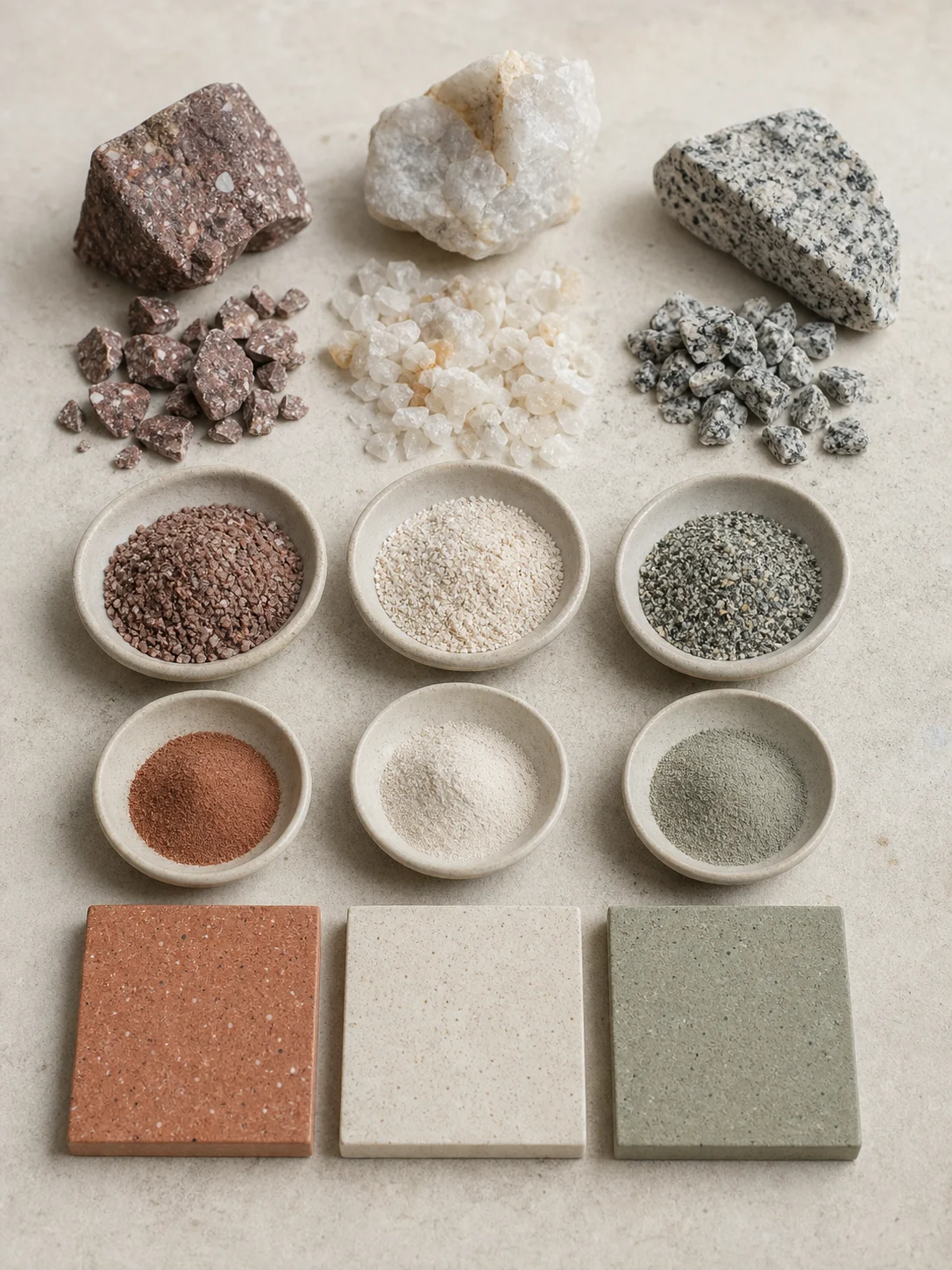
Our compacted stone tiles are produced using reclaimed stone materials, including quartz stone, porphyry and granite generated during stone processing. Instead of allowing these mineral resources to become waste, they are collected, processed and compacted into new architectural surfaces.
Giving Stone Materials a Second Life
Stone production and fabrication can generate offcuts and smaller fragments that are difficult to use in their original form. However, the material itself still retains its natural texture, strength and visual character.
By transforming these remaining stone materials into compacted tiles, it becomes possible to reduce material waste while creating a surface with its own distinctive identity.
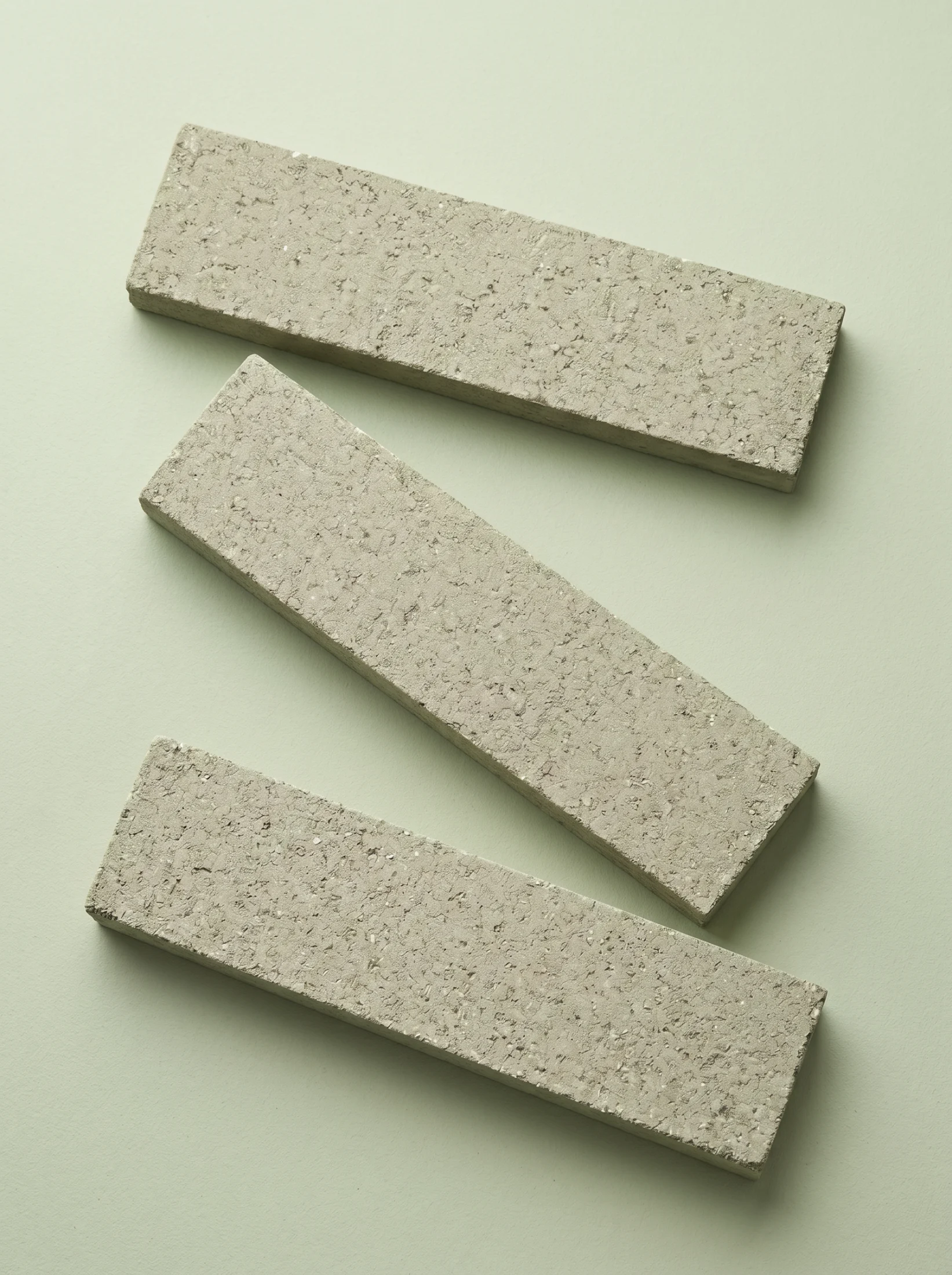
Each tile carries subtle variations in mineral texture, giving interiors a more tactile and natural appearance than completely uniform, mass-produced finishes.
Durability Is Part of Sustainability
A sustainable material should not only use recycled resources. It should also perform well over time.
Materials that wear out quickly often need to be removed, transported and replaced, creating additional waste and resource consumption. Durable surfaces can remain in use for longer, reducing the frequency of renovation and replacement.
CLEM compacted stone tiles are designed for demanding interior environments, including:
- Retail and hospitality spaces
- Restaurants and cafés
- Bathrooms and wet areas
- Residential kitchens and living spaces
- Commercial flooring and feature walls
- Staircases and customised architectural details
Their mineral composition and compacted structure make them suitable for projects where both visual character and long-term performance matter.
Designing With Less Waste
Material efficiency also depends on how products are designed and specified.
CLEM tiles can be cut into different dimensions and customised shapes, allowing designers to respond more precisely to the requirements of a project. Thoughtful sizing and layout planning can help reduce unnecessary cutting and leftover material during installation.
The material can also be used across floors, walls, counters, stairs and other interior details, helping designers create a consistent material language throughout a space.
Sustainability Without Sacrificing Creativity
Environmental responsibility should not restrict creative freedom.
Our compacted stone tiles can be produced in a wide range of colours, from warm terracotta and natural mineral tones to softer neutral or contemporary shades. Different colours, formats and surface treatments can be combined to create checkerboard layouts, geometric patterns or more understated continuous surfaces.
This gives architects and interior designers the freedom to create distinctive environments while making more considered material choices.
A More Considered Material Future
No single product can make an entire project sustainable. Sustainability comes from a series of decisions involving material sourcing, product lifespan, installation, maintenance and eventual reuse or replacement.
Recycled compacted stone offers one practical way to give existing mineral resources a second life while creating durable and visually expressive interior surfaces.
At CLEM, our goal is to help designers move beyond disposable finishes and create spaces that feel distinctive, perform reliably and remain relevant for years.
Discover CLEM recycled compacted stone tiles for commercial, hospitality and residential interior projects.
Research notes
Sources & verification
- CLEM production documentation and current product information.
- CLEM material test reports and project-specific technical data.
Technical suitability and current availability should be confirmed for each project.