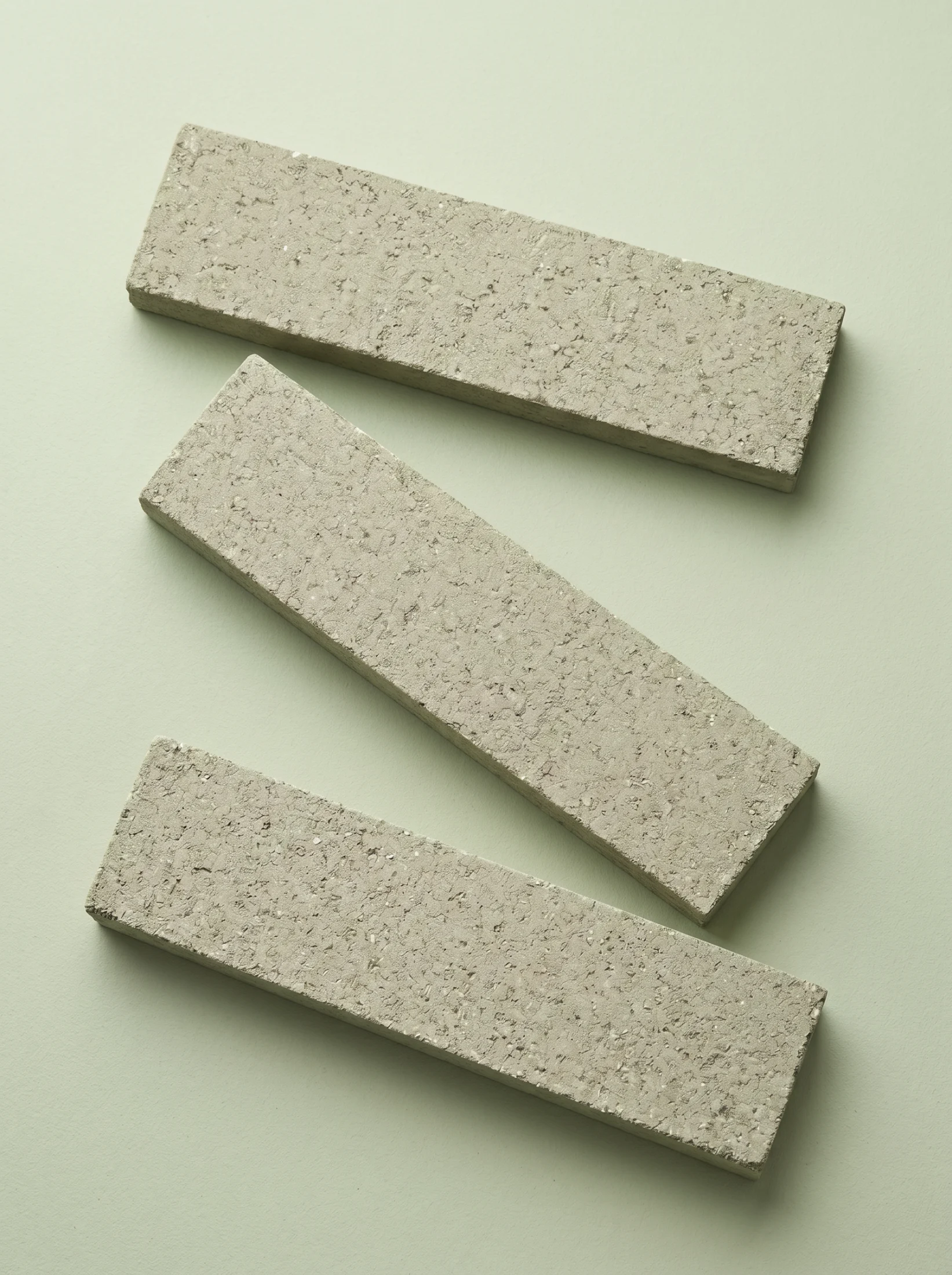
CLEM production begins by keeping selected material in circulation and turning it into a considered architectural surface.
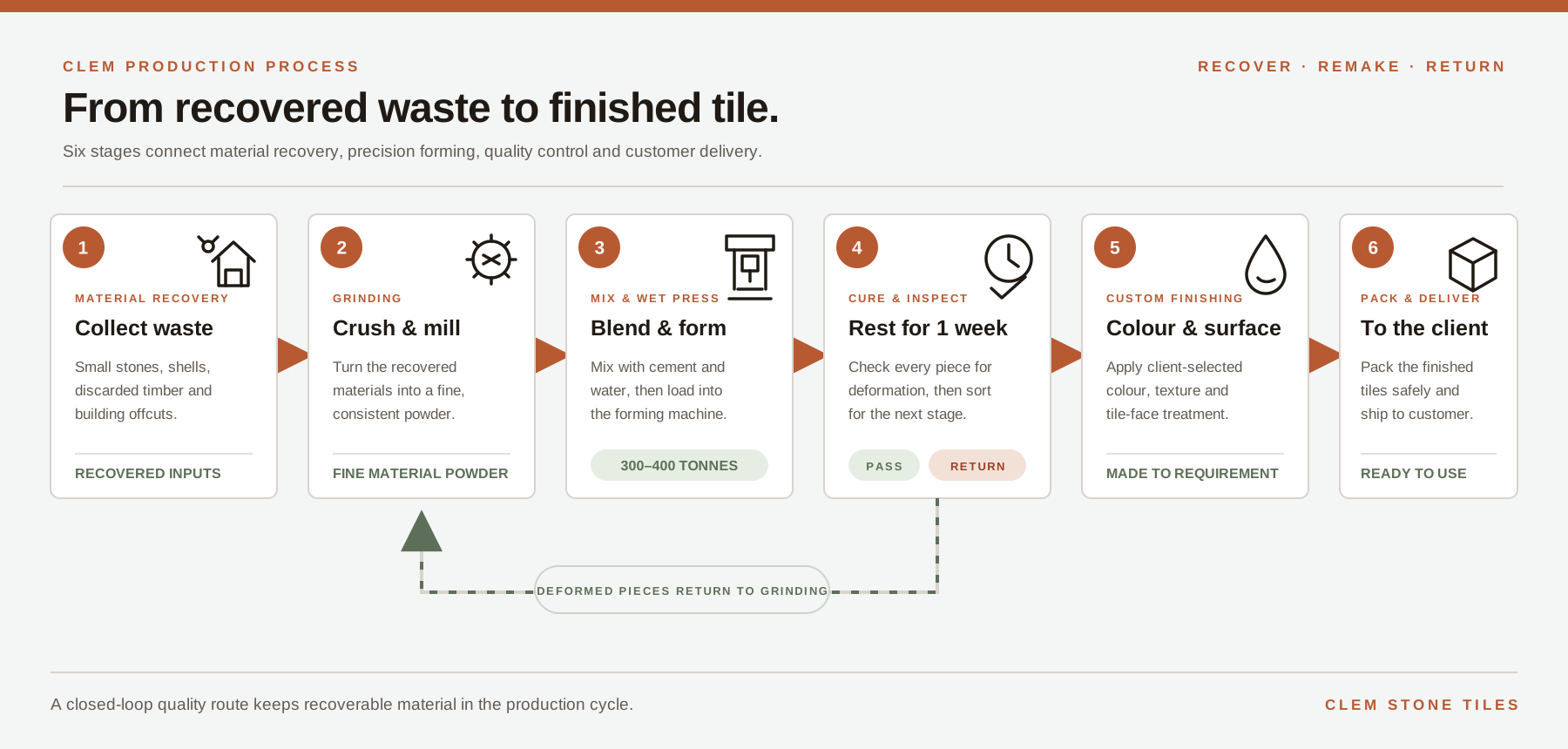
1. Collecting recovered building materials
Small stone fragments, shells, selected discarded wood and other suitable building offcuts are collected and sorted for reuse.
2. Grinding the recovered material
The selected material is processed into a fine powder so it can be blended evenly for the next stage.
3. Mixing and wet pressing
The prepared material is mixed with cement and placed into a press. A pressure of approximately 300 to 400 tonnes is applied during the wet-pressing stage to form the tile body.
4. Resting, inspection and sorting
After pressing, the pieces rest for one week. Each piece is checked for deformation and sorted. Pieces that pass inspection move forward; deformed pieces return to the grinding stage so the material can re-enter production.
5. Colour and surface customisation
The accepted pieces are coloured and their surface finish is customised according to the customer's project requirements.
6. Packing and delivery
Finished tiles are packed into protective cartons and prepared for delivery to the customer.