"Recycled tiles" can mean three very different things, and most confusion starts there. Some people searching for recycled tiles want reclaimed tiles: second-hand tiles salvaged from old buildings and reused as they are. Others want new tiles made with recycled material, such as recycled glass, recycled porcelain or recycled stone. And some simply want to know whether their old tiles can be recycled at all.
This guide separates the three, so you can brief a supplier or a client with the right words and ask the right questions.
Quick answer
- Reclaimed tiles are used tiles, cleaned and sold again in their original form. Nothing is reprocessed.
- Recycled tiles (recycled-content tiles) are new tiles whose raw material includes waste that has been ground, melted or otherwise reprocessed.
- Old tiles are rarely accepted in household recycling. Clean, intact tiles can be resold for reuse; broken tiles usually go to construction-waste recyclers, where they are crushed into aggregate.
Recycled vs reclaimed tiles: what is the difference?
The simplest test is whether the material has been changed. Reclaimed material is reused in its existing form, while recycled material is broken down and reprocessed into raw material for something new.
| Reclaimed tiles | Recycled-content tiles | |
|---|---|---|
| What they are | Original tiles salvaged from demolition or renovation | New tiles made partly from processed waste |
| Processing | Cleaned, sorted, sometimes re-sized by hand | Waste is ground, melted or pressed into a new body |
| Quantity | Limited to what was salvaged; hard to extend later | Made to order or from stock, so repeat orders are possible |
| Consistency | Varies tile to tile and batch to batch | Set by the production process; some ranges add deliberate variation |
| Specification data | Often unknown age, glaze and performance | Product data from the manufacturer |
| Typical use | Heritage restoration, one-off feature floors and walls | Commercial and residential projects that need quantity and documentation |
Reclaimed tiles are hard to beat on character and on avoided manufacturing, but they suit projects that can live with limited quantities and unknown data. For a restaurant group that needs the same wall in five sites, or a contractor who must order extra stock later, recycled-content tiles are usually the practical choice.
What are recycled tiles made of?
"Recycled" describes where some of the raw material came from, not what the tile is. The main families:
| Type | Recycled input | What to expect |
|---|---|---|
| Recycled glass tiles | Post-consumer or industrial glass, melted and re-formed | Bright, often translucent colour; glossy; usually walls, splashbacks and pools |
| Recycled-content porcelain and ceramic | Factory scrap, fired waste or ground ceramic mixed back into the clay body | Looks and performs like standard porcelain or ceramic |
| Recycled stone tiles | Offcuts and fragments from stone processing, ground and bound into a new body | Matt, mineral surface with visible flecks; brick, square and mosaic formats |
| Recycled plastic and rubber tiles | Plastic or tyres | Mostly outdoor, gym or utility flooring, not decorative walls |
The share of recycled material varies widely between products and makers, so ask for the figure and how it was calculated. Our guide on how to evaluate environmental claims for recycled tiles lists the documents worth requesting.
Are recycled tiles durable?
Durability depends on the tile body, the finish and where it is installed, not on the word "recycled". A recycled-content porcelain tile behaves like porcelain. A recycled glass tile behaves like glass: it does not absorb water, but a glossy face can be slippery on floors, and translucent pieces can show the adhesive behind them. A recycled stone tile behaves like a compact stone or cement-bound tile.
So ask the same questions you would ask of any tile:
- Is it catalogued for walls, floors or both, and inside or outside?
- What finish is it supplied in, and does it need sealing?
- For floors, what slip-resistance results are available for that finish?
- How much variation should you expect between pieces and between batches?
Can old tiles be recycled?
Usually not through household kerbside bins. In Australia, many yards that take bricks and concrete also take ceramics, but not all, so it is worth checking before you drop anything off. Some commercial recyclers place bins on site and crush the material there or collect it for processing.
Clean, intact tiles in reasonable quantities can often be sold for reuse, which is where the reclaimed tile market comes from. Crushed ceramics can become drainage material, base for driveways and paths, or aggregate.
Where CLEM recycled stone tiles fit
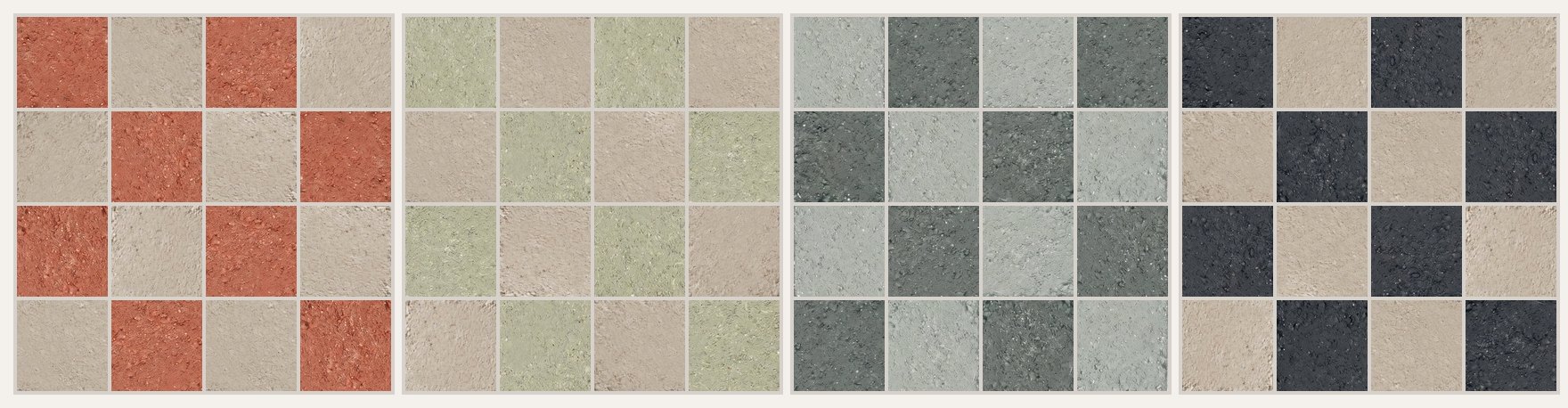
CLEM tiles are recycled-content tiles, not reclaimed ones. They start with recovered material such as porphyry, quartz and granite fragments from stone processing and other suitable building offcuts. The material is ground to a fine powder, mixed with cement and wet-pressed at roughly 300 to 400 tonnes, then rested and inspected. The colours are mixed by hand, and after pressing the edges are trimmed and the surface texture is worked by hand, so each tile is hand-finished rather than handmade. How CLEM tiles are made covers each step.
That gives a middle ground between the two worlds above: the tonal variation and mineral flecks people like in reclaimed and handmade surfaces, with the repeatable sizes and reorder options of a manufactured tile. The Clem Colour Palette comes in 20 colours across square, brick and mosaic formats, plus custom shades; see compact stone tiles for how this material compares with porcelain and fired terracotta.
Which one should you choose?
- Choose reclaimed tiles for heritage work, a single feature floor, or when the story of a specific salvaged tile is the point, and you can live with the quantity you find.
- Choose recycled glass for bright, reflective walls and splashbacks.
- Choose recycled-content porcelain when you need porcelain performance in large formats.
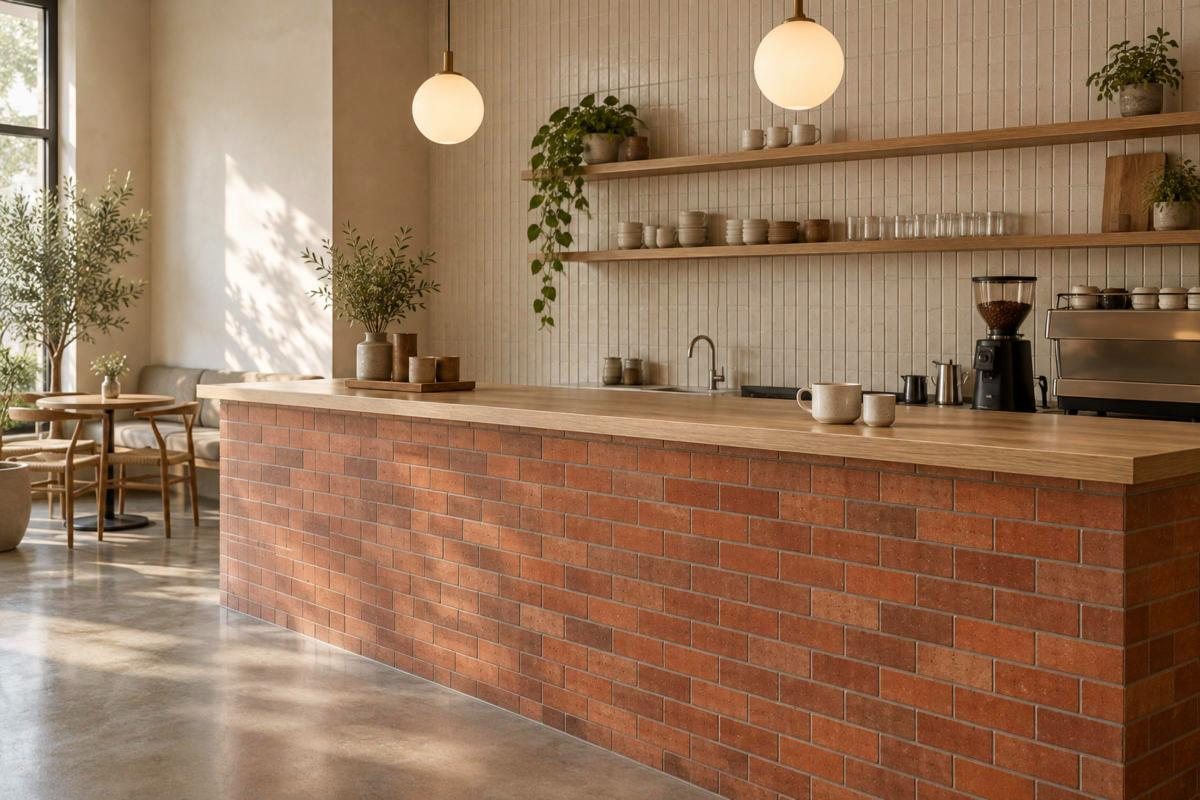
- Choose recycled stone for matt, mineral-textured walls, counters and bar fronts in warm colours, with consistent sizes and repeat orders.
FAQ
What does "recycled tiles" mean? It can mean reclaimed (second-hand) tiles or new tiles that contain recycled material. Ask which one a supplier means.
Are recycled tiles the same as reclaimed tiles? No. Reclaimed tiles are reused as they are; recycled tiles are new tiles made from reprocessed waste.
What are recycled tiles made of? Common inputs are recycled glass, ceramic factory waste, stone offcuts and, for utility flooring, plastic or rubber.
Are recycled tiles more expensive? It depends on the product. Reclaimed tiles vary with rarity and cleaning work; recycled-content tiles are priced like the material family they belong to.
Can broken tiles be recycled? Often, through construction-waste recyclers that crush them into aggregate. Check with your local facility first.
Comparing materials for a project? Request samples and tell us the space, the area and your timeline.
Research notes
Sources & verification
- Cawarden Reclaim, "Reclaimed vs recycled" (definition: reclaimed material is reused in its existing form; recycled material is reprocessed into new raw material): https://www.cawardenreclaim.co.uk/reclaimed-vs-recycled/
- Planet Ark RecyclingNearYou, Ceramics (yards that take bricks and concrete often take ceramics; check first; reuse of clean tiles; crushed ceramics used as drainage, base and aggregate): https://recyclingnearyou.com.au/material/work/ceramics
- CLEM compact stone tiles page and production article, checked 12 November 2026: recovered porphyry, quartz and granite, ground, mixed with cement, wet-pressed at roughly 300 to 400 tonnes, rested and inspected. https://www.clemstonetiles.com/compact-stone-tiles.html
- CLEM production information confirmed by CLEM on 11 November 2026: colours mixed by hand; edges trimmed and surface texture worked by hand after pressing.
- Search-term research, 10 to 12 November 2026 (Google Trends and autocomplete, Australia, UK and US): "recycled tiles" is often used for second-hand and roof tiles; related questions include what recycled tiles are made of, whether tiles can be recycled and recycled versus reclaimed.
- Comparison tables and selection advice are editorial guidance, not product-performance claims. All three images are AI-generated concept images created for this article, not photographs of CLEM products or projects.
Technical suitability and current availability should be confirmed for each project.